Showing posts with label Iran. Show all posts
Showing posts with label Iran. Show all posts
Tuesday, March 20, 2012

Thursday, March 8, 2012
Iran and the bomb
Let's start with an excerpt from The Economist, on a possible air attack on the Iranian nuclear program:
Attacking Iran: Up in the air
Attacking Iran: Up in the air
But even if things went off without a hitch Iran would retain the capacity to repair and reconstitute its programme. Unless Israel was prepared to target the programme’s technical leadership in civilian research centres and universities the substantial nuclear know-how that Iran has gained over the past decades would remain largely intact. So would its network of hardware suppliers. Furthermore, if Iran is not already planning to leave the NPT such an attack would give it ample excuse to do so, taking its entire programme underground and focusing it on making bombs as soon as possible, rather than building up a threshold capability. Even a successful Israeli strike might thus delay Iran’s progress by only three or four years, while strengthening its resolve.
In other words, an air attack simply will not prevent Iran from acquiring a nuclear weapon.
From the print edition:
Proponents of an attack argue that military humiliation would finish the regime off. But it is as likely to rally Iranians around their leaders.
In my opinion also, the best possible thing that can happen to a paranoid xenophobic regime like Iran or North Korea is a limited attack on it. Think about it: the government chiefly legitimizes itself by creating a worldview where their state is under constant attack from a hostile surrounding world. It's totalitarianism 101. An attack on Iran would basically tell the population that the bearded crazies ranting about how the Great Satan America is going to attack them any minute now were right all along. In an article I link to later, Iran's opposition "Green movement" is quoted as saying that a US/Israeli attack is the worst possible thing that could happen to reform in Iran. There can be little doubt that they're right.
As an article in the Washington Monthly strongly argues, the whole notion of a nuclear-armed Iran as a horrible disaster for the whole world doesn't seem to be grounded in any actual strategic scenarios. On the contrary, Iran only seems to want a nuclear capability to deter the US and Israel. Not that any clear case for the air strikes is being made, either; the USAF chief of staff recently wondered what the objective of an air campaign might be, in fairly skeptical terms.
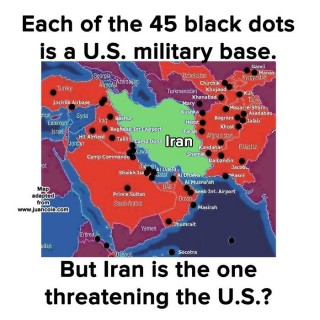
It should be remembered that Iran constantly faces an aggressive near neighbor with a considerable nuclear, biological and chemical arsenal and a propensity to invade nearby countries: Israel. Iran is also one of the rare nations that has had weapons of mass destruction used against it in the not-so-distant past; the conventional carnage of the Iran-Iraq war was horrifying enough, but Iraqi atrocities like the Halabja attack added an element of pure horror to the war. Iranian leaders are unlikely to have forgotten that the Iraqi chemical arsenal was provided by the very countries that are now so stridently opposed to Iran's nuclear program, or that the US helped silence reports of Iraq's use of chemical weapons against Iranian civilians.
Iran can also hardly be expected to forget that those same Western powers have for decades tacitly accepted Israel's nuclear arsenal, even keeping quiet when Israel actively participated in the apartheid-era South African nuclear program. From Iran's point of view, the West's position seems to be that while Western allies are allowed to use weapons of mass destruction against Iran, and countries like Israel and apartheid South Africa can develop a nuclear capacity, Iran can't. It's a policy that's hard to justify to its victims.
An attack on Iran would be militarily risky, wouldn't stop it from acquiring a nuclear weapon, and would seem to have no positive consequences whatsoever for the security and stability of the Middle East. And that's exactly why Israel is so likely to carry it out.
The basic strategy of Israel since its founding has been the strategy of the "iron wall", best described by Israeli historian Avi Shlaim in his book of the same name. In short, throughout its existence Israel has deliberately maintained a high state of tension with its neighbors. Most of the time, little active effort has been required, but when it has, Israel has resorted to terrorism and provocations, and as a last resort, invaded its neighbors. This strategy of tension serves to keep Israeli domestic policies in line; with the constant threat of an external enemy, criticism of the powers that be can be stamped out as treason, and any external criticism dismissed as anti-Semitism. Israel's entire foreign policy rests on its image as a peace-loving victim of its innately evil neighbors; without that image the world would be too free to take a long, hard look at the way the Palestinians are being treated, and at other disagreeable aspects of Israel. The only lasting peace Israel can conceive of is one that it dictates.
This policy was last prominently seen in action in the criminal Israeli raid on the Turkish aid ship bound for Gaza. From a strategic point of view, the way Israel handled the situation was a disaster: nothing in the relief mission to Gaza was of sufficient importance to justify such a brutal attack, let alone the international outcry that followed - unless creating that outcry was one of the strategic aims of the operation: to once again "prove" to the Israeli people and their government's supporters abroad how the world is in league against poor, misunderstood Israel. The same motive has informed Israel's "settlement" program, which is deliberately designed to, among other things, sabotage the Palestinian peace process. It last accomplished this function when it was used to destroy the high-profile peace negotiations started by an astonishingly naive Obama administration.
An escalation of tension in the Middle East would be in Israel's interests as part of its continuing strategy of tension with the Muslim world. For that reason, they may very well present the US with a fait accompli in the form of an unilateral strike on Iran before the next presidential election. Because the topic of Israel simply cannot be addressed rationally in US politics, it would be electoral suicide for the Obama administration to not support an Israeli attack, no matter how counter-productive it would be from the point of view of US strategy. As long as US politicians continue to pretend that the United States and Israel have the same strategic goals, US Middle Eastern policy will be at the mercy of Israel's military adventurism. When this combines with the fact that US public discourse on Iran is completely detached from reality, Israel's design stands a good chance of succeeding.
In the long run, an Iranian nuclear capacity would probably stabilize the Middle East by making Iran more secure from intervention. The same thing happened with both the Soviet Union and China, even though hawks in the West prophesied disaster at the time. In its political history so far, the Islamic Republic of Iran had shown itself to be a largely rational state actor. So far, nuclear weapons in Muslim hands haven't led to a global or even local apocalypse. Treating Iran as a collection of genocidal lunatics to be cowed by a surgical use of American military power is repeating the same hubris that led to decade-long wars in Iraq and Afghanistan, with potentially far worse results. In fact, the one thing that could be relied on to push Iran's leaders toward unreasoning radicalism would be a brutal US-Israeli attack. And that may well be exactly what Israel's political leadership wants.
If the aim is stability and consequently security in the Middle East, it seems to this blogger that the best way to achieve it in the current situation would be through mutual deterrence, as pioneered and perfected between the superpowers in the Cold War. Erect the paraphernalia of Mutually Assured Destruction anew in the Middle East: mutual and third-party verification of weapons, arms control treaties, a telephone hot line, the lot. There should still be plenty of Cold War know-how around. Such an arrangement would represent an equitable solution that addresses both parties' need for security and the rest of the world's interest in a peaceful oil-producing region. Included in the negotiations would be Iran's support for terrorist groups like the Hezbollah, and Israel's assassination campaign against the Italian nuclear program.
In the real world, this will never happen, because the West seems to be unable to exert the kind of diplomatic pressure on Israel that would bring it to the negotiation table and actually agree to a solution. Even acknowledging that Israel has nuclear weapons seems to be an insuperable obstacle, let alone bringing them up for negotiations.
Another option would be for the United States to extend some kind of security guarantee to Iran; essentially a "non-invasion" promise similar to the one made to the Soviets on Cuba. This, too, seems impossible. President Kennedy could do it, President McCain might have; President Obama simply can't. Even if he somehow found the foreign policy willingness and ability that his administration has so conspicuously lacked, letting the right go berserk over "appearing islamofascism" could decide the election.
Once again, the most likely outcome is that stability in the Middle East will remain as elusive as ever; not because of any inherent characteristics of the region and its inhabitants, but as a consequence of the West's continuing insistence on treating Israel's interests as identical to theirs. As long as this dangerous illusion persists, the West's policy will remain essentially counter-productive to any lasting peace in the region.
It's almost inconceivable that the US, still embroiled in two wars (despite Obama's cold war-esque "withdrawals"), is contemplating intervention in Iran and even Syria to boot. Unless cooler heads prevail, the ongoing Middle Eastern entanglement (1990-?) and concurrent "war on drugs/terror/civil liberties" will become a national trauma to dwarf Vietnam, with far worse consequences for the stability of the whole world.
Sunday, November 27, 2011
Russians & North Koreans in Iran: Collateral Damage?
From OilPrice.com:
As the drums for direct military intervention to derail Iran’s purported covert military nuclear weapons program beat louder in both Jerusalem and Washington, an overlooked issue is the possibility of international “collateral damage,” to use the Pentagon’s favourite euphemism for civilian casualties.
On 14 November South Korea’s Chosun Ilbo stated, "Hundreds of North Korean scientists and engineers are working at about 10 nuclear and missile facilities in Iran, including Natanz, The North Koreans are apparently rotated every six months." Russian technicians also remain at Iran’s first nuclear electrical energy facility, Bushehr. So, any aerial strikes against Iran’s nuclear facilities could result in significant numbers of dead Russian and North Korean specialists as “collateral damage,” with all the diplomatic uncertainties that might ensue from Moscow and Pyongyang as the body bags start arriving home.
The https://www.cia.gov/ website, which listed the report, describes the Chosun Ilbo website as “conservative in editorial orientation -- strongly nationalistic, anti-North Korea, and generally pro-U.S.”
For those looking for more smoking guns, Japan’s Sankei Shimbun reports that among the Iranian sites the North Koreans have been involved in are three research centres carrying out simulations of how to trigger nuclear weapons.
The news complicates the situation for advocates of a “clean” surgical strike against Iran’s nuclear facilities.
Airstrike Against Iranian Nuclear Facilities Could Kill 100s of North Koreans and Russians John Daly
Wednesday, 16 November 2011
http://oilprice.com/Geo-Politics/Middle-East/Airstrike-Against-Iranian-Nuclear-Facilities-Could-Kill-100s-of-North-Koreans-and-Russians.html
As the drums for direct military intervention to derail Iran’s purported covert military nuclear weapons program beat louder in both Jerusalem and Washington, an overlooked issue is the possibility of international “collateral damage,” to use the Pentagon’s favourite euphemism for civilian casualties.
On 14 November South Korea’s Chosun Ilbo stated, "Hundreds of North Korean scientists and engineers are working at about 10 nuclear and missile facilities in Iran, including Natanz, The North Koreans are apparently rotated every six months." Russian technicians also remain at Iran’s first nuclear electrical energy facility, Bushehr. So, any aerial strikes against Iran’s nuclear facilities could result in significant numbers of dead Russian and North Korean specialists as “collateral damage,” with all the diplomatic uncertainties that might ensue from Moscow and Pyongyang as the body bags start arriving home.
The https://www.cia.gov/ website, which listed the report, describes the Chosun Ilbo website as “conservative in editorial orientation -- strongly nationalistic, anti-North Korea, and generally pro-U.S.”
For those looking for more smoking guns, Japan’s Sankei Shimbun reports that among the Iranian sites the North Koreans have been involved in are three research centres carrying out simulations of how to trigger nuclear weapons.
The news complicates the situation for advocates of a “clean” surgical strike against Iran’s nuclear facilities.
Airstrike Against Iranian Nuclear Facilities Could Kill 100s of North Koreans and Russians John Daly
Wednesday, 16 November 2011
http://oilprice.com/Geo-Politics/Middle-East/Airstrike-Against-Iranian-Nuclear-Facilities-Could-Kill-100s-of-North-Koreans-and-Russians.html
Saturday, November 5, 2011
FBI Insider: Obama Administration Likely Manufactured Dubious Terror Plot
No information about plot exists within FBI channels
Paul Joseph Watson
Wednesday, October 13, 2011
http://www.prisonplanet.com/fbi-insider-obama-administration-likely-manufactured-dubious-terror-plot.html
Retired U.S. Army Lieutenant Colonel Anthony Shaffer says that an FBI insider told him the dubious terror plot to assassinate a Saudi ambassador which has been blamed on Iran was likely manufactured by the Obama administration, because no information about the plot even exists within FBI channels.
The plot, an assassination attempt against Saudi Arabia’s ambassador to the United States, Adel al-Jubeir, was pinned on an Iranian-American used-car salesman from Texas and subsequently linked by the Obama administration to a wider conspiracy controlled by Iran’s Islamic Revolutionary Guards Corps.
According to the administration, used car salesman Mansour J. Arbabsiar tried to hire assassins from a Mexican drug gang to carry out the murder, but the head of the drug gang turned out to be a DEA agent posing as a Mexican Los Zetas gangster. The story has all the hallmarks of classic FBI entrapment tactics that have characterized almost every major terror bust in recent times.
Having personally interrogated Iranians, Shaffer doubted the fact that members of the elite Quds Force would risk carrying out an assassination in the United States when it would be far easier to conduct such a plot in the middle east.
“It does not smell correctly,” Shaffer told Fox Business host Andrew Napolitano, adding that it was doubtful a successful used car salesman who has been part of the community for 15 years would suddenly become embroiled in an international assassination plot.
Asked by Napolitano if Arbabsiar was the victim of another FBI sting, Shaffer responded, “I think that’s part of it.”
“The FBI’s had a record lately and I did talk to one of my inside guys and he is saying he thinks the same thing, you know why, because he can’t find any real information and he’s got a clearance – so that tells him that there’s something going on that’s extraordinary by the fact that he’s an inside investigator, knows what’s going on and yet, I’m gonna quote here, ‘There’s nothing on this within the DOJ beyond what they’ve talked about publicly’ – which means to him that there’s something very wrong with it,” said Shaffer.
Even the New York Times is now reporting that the dubious nature of the plot has caused “a wave of puzzlement and skepticism from some foreign leaders and outside experts.”
The military-industrial complex has long been searching for a pretext that could be used to justify military strikes against Iran.
In a 2009 report entitled “Which Path to Persia?”, the elitist Brookings Institution wrote, “It would be far more preferable if the United States could cite an Iranian provocation as justification for the airstrikes before launching them. Clearly, the more outrageous, the more deadly, and the more unprovoked the Iranian action, the better off the United States would be.”
The dubious plot has been instantly seized upon by the likes of Hillary Clinton and John Kerry to push for Iran to be further isolated by the international community. Kerry’s comments were perhaps the most bellicose, telling reporters yesterday, “I don’t think anything should be taken off the table at this point in time.”
It has also served as a useful distraction for Attorney General Eric Holder, who is currently under investigation for his role in the infamous Fast and Furious program, which saw the federal government deliver thousands of military-grade weapons to leaders of Mexican drug gangs.
“That the current “alleged” plot pinned on Iran revolves around yet another undercover federal agency conducting a long-term sting operation defies belief,” writes Tony Cartalucci. “That we are expected to believe one of Iran’s most elite military forces left such a sensitive, potentially war-starting operation to a used-car salesman and a drug gang reported in the papers daily for its involvement with US government agencies (and who turns out to actually be undercover DEA agents) is so ridiculous it can only be “made up” as Secretary Clinton puts it. More accurately, it is the result of an impotent US intelligence community incapable of contriving anything more convincing in the face of an ever awakening American public, to bolster its morally destitute agenda. The cartoonish nature of the plot and the arms’ length even its proponents treat it with to maintain plausible deniability is indicative of a dangerously out of control ruling elite and an utterly incompetent, criminally insane government.”
Paul Joseph Watson is the editor and writer for Prison Planet.com. He is the author of Order Out Of Chaos. Watson is also a regular fill-in host for The Alex Jones Show.
Paul Joseph Watson
Wednesday, October 13, 2011
http://www.prisonplanet.com/fbi-insider-obama-administration-likely-manufactured-dubious-terror-plot.html
Retired U.S. Army Lieutenant Colonel Anthony Shaffer says that an FBI insider told him the dubious terror plot to assassinate a Saudi ambassador which has been blamed on Iran was likely manufactured by the Obama administration, because no information about the plot even exists within FBI channels.
The plot, an assassination attempt against Saudi Arabia’s ambassador to the United States, Adel al-Jubeir, was pinned on an Iranian-American used-car salesman from Texas and subsequently linked by the Obama administration to a wider conspiracy controlled by Iran’s Islamic Revolutionary Guards Corps.
According to the administration, used car salesman Mansour J. Arbabsiar tried to hire assassins from a Mexican drug gang to carry out the murder, but the head of the drug gang turned out to be a DEA agent posing as a Mexican Los Zetas gangster. The story has all the hallmarks of classic FBI entrapment tactics that have characterized almost every major terror bust in recent times.
Having personally interrogated Iranians, Shaffer doubted the fact that members of the elite Quds Force would risk carrying out an assassination in the United States when it would be far easier to conduct such a plot in the middle east.
“It does not smell correctly,” Shaffer told Fox Business host Andrew Napolitano, adding that it was doubtful a successful used car salesman who has been part of the community for 15 years would suddenly become embroiled in an international assassination plot.
Asked by Napolitano if Arbabsiar was the victim of another FBI sting, Shaffer responded, “I think that’s part of it.”
“The FBI’s had a record lately and I did talk to one of my inside guys and he is saying he thinks the same thing, you know why, because he can’t find any real information and he’s got a clearance – so that tells him that there’s something going on that’s extraordinary by the fact that he’s an inside investigator, knows what’s going on and yet, I’m gonna quote here, ‘There’s nothing on this within the DOJ beyond what they’ve talked about publicly’ – which means to him that there’s something very wrong with it,” said Shaffer.
Even the New York Times is now reporting that the dubious nature of the plot has caused “a wave of puzzlement and skepticism from some foreign leaders and outside experts.”
The military-industrial complex has long been searching for a pretext that could be used to justify military strikes against Iran.
In a 2009 report entitled “Which Path to Persia?”, the elitist Brookings Institution wrote, “It would be far more preferable if the United States could cite an Iranian provocation as justification for the airstrikes before launching them. Clearly, the more outrageous, the more deadly, and the more unprovoked the Iranian action, the better off the United States would be.”
The dubious plot has been instantly seized upon by the likes of Hillary Clinton and John Kerry to push for Iran to be further isolated by the international community. Kerry’s comments were perhaps the most bellicose, telling reporters yesterday, “I don’t think anything should be taken off the table at this point in time.”
It has also served as a useful distraction for Attorney General Eric Holder, who is currently under investigation for his role in the infamous Fast and Furious program, which saw the federal government deliver thousands of military-grade weapons to leaders of Mexican drug gangs.
“That the current “alleged” plot pinned on Iran revolves around yet another undercover federal agency conducting a long-term sting operation defies belief,” writes Tony Cartalucci. “That we are expected to believe one of Iran’s most elite military forces left such a sensitive, potentially war-starting operation to a used-car salesman and a drug gang reported in the papers daily for its involvement with US government agencies (and who turns out to actually be undercover DEA agents) is so ridiculous it can only be “made up” as Secretary Clinton puts it. More accurately, it is the result of an impotent US intelligence community incapable of contriving anything more convincing in the face of an ever awakening American public, to bolster its morally destitute agenda. The cartoonish nature of the plot and the arms’ length even its proponents treat it with to maintain plausible deniability is indicative of a dangerously out of control ruling elite and an utterly incompetent, criminally insane government.”
Paul Joseph Watson is the editor and writer for Prison Planet.com. He is the author of Order Out Of Chaos. Watson is also a regular fill-in host for The Alex Jones Show.
Subscribe to:
Posts (Atom)